
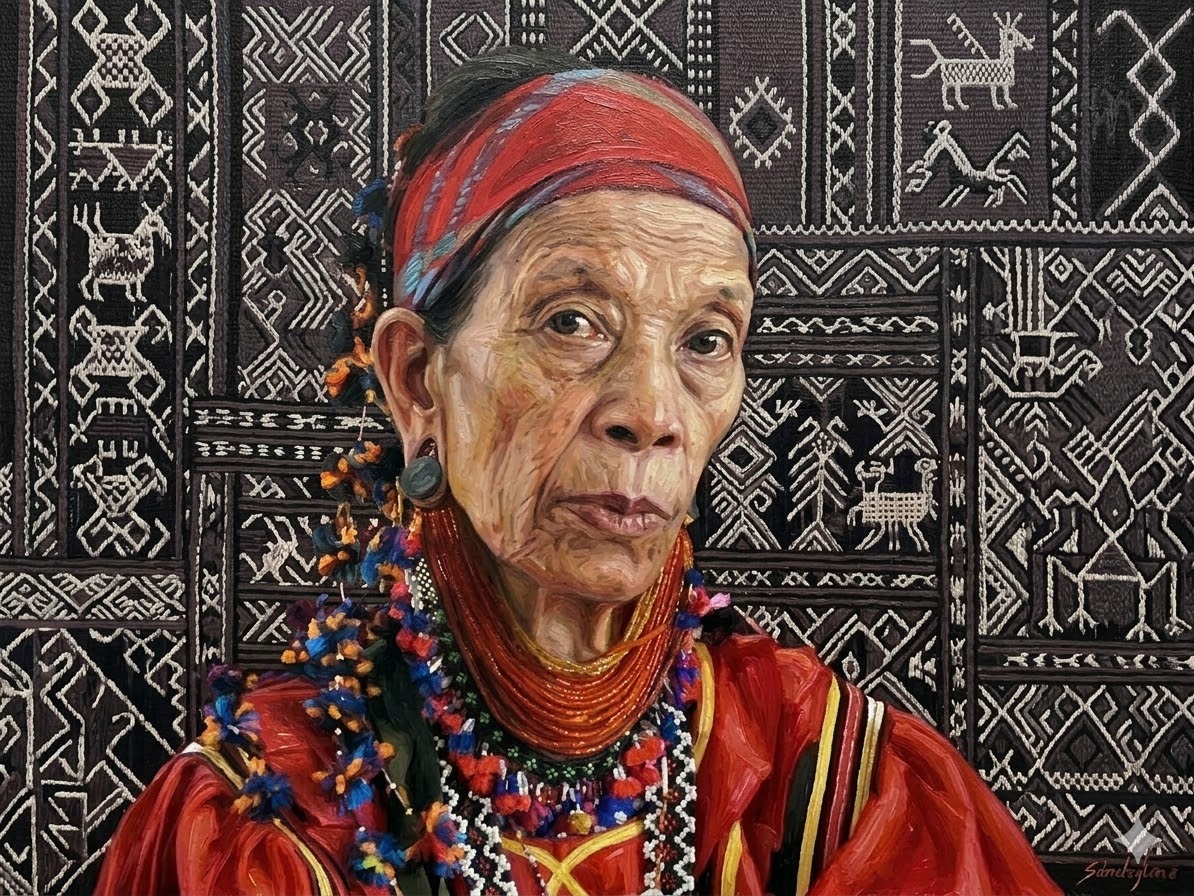
This Women’s Month, we honor the leadership that rises from the rugged mountains and river valleys of Mindanao. While many leaders have defended the Lumad—the indigenous peoples of the Philippines—against corporate and military encroachment, one figure stands as the defining symbol of indigenous resistance: Bai Bibyaon Ligkayan Bigkay. Her life was forged in profound courage, yet shadowed by a state-sponsored tactic meant to delegitimize her and silence her defense of the Pantaron Range: red-tagging.
The Heart of the Struggle: Land and Identity
To understand Bai Bibyaon is to understand the concept of ancestral domain. For the Lumad, land is not a piece of property; it is their history, their pharmacy, and their future. The Pantaron Mountain Range, which traverses several provinces in Mindanao, is one of the last remaining virgin forests in the Philippines. It is the watershed of major river systems and the home of the Manobo tribe. When large-scale mining, logging, and plantation projects threatened Pantaron, they did not just threaten to clear trees; they threatened to erase the very identity of the Manobo people.
Bai Bibyaon rose to ensure that erasure would not happen.
The Chieftain: A Life of Unwavering Resistance
Bai Bibyaon Ligkayan Bigkay was the first and only female chieftain (Bai) of the Manobo people. Her life was a masterclass in environmental defense. While traditional Lumad leadership roles were often held by men (Datus), she unified various tribes through her clear vision of what it meant to protect the lupa pansaka (ancestral land).
Her defining moment came in the 1990s. Faced with massive, government-approved logging concessions that were decimating the Pantaron forest, she organized a pangayaw—a traditional armed defense of the ancestral domain. She proved that a female chieftain could lead a war just as effectively as any man. However, her true victory lay not in violence, but in her ability to organize. She forced the logging companies to retreat, preserving the forest for future generations.
In her later years, as militarization in Mindanao intensified, Bai Bibyaon became the leading voice of the “bakwit” (evacuee) movement. She was displaced multiple times, seeking refuge in church sanctuaries, yet she never stopped advocating for Lumad rights. She passed away in 2023 at the age of 90, leaving a legacy as the “Mother of the Lumads” and a pillar of the Sabokahan Unity of Lumad Women.
The Weapon of Red-Tagging: Silencing the Bai
Despite her legendary status as a peaceful advocate for land and life, Bai Bibyaon was a consistent target of red-tagging—the official practice where the government or military labels individuals as “communists” or “terrorists” without trial or evidence.
For Bai Bibyaon, red-tagging was the state’s primary tool for disrupting her environmental activism. By labeling her a “rebel leader” or a “front” of the New People’s Army (NPA), the state attempted to strip away her status as a human rights defender. This framing served several functions:
- Weaponizing Labels: It sought to delegitimize her indigenous leadership by subsuming it under an ideological communist insurgency.
- Forced Narratives: Before her death, the military and its anti-communist task force (NTF-ELCAC) repeatedly claimed Bai Bibyaon was being “held captive” and “exploited” by the rebels she supposedly led.
- Refuting the Narrative: Bai Bibyaon spent her final years directly refuting these claims in video statements, maintaining that she was not a combatant. She asserted that her only captor was the age-old struggle for her people’s land and that she would only ever be held against her will by the forces trying to steal it.
Red-tagging, for Bai Bibyaon, was a form of erasure. It attempted to reframe her life’s work—the defense of the Pantaron forest—as a crime against the state, replacing her true identity as a “Chieftain and Protector” with the government-sanctioned label of “Insurgent.”
Why Bai Bibyaon Deserves Global Recognition
Bai Bibyaon Ligkayan Bigkay is not just a Philippine icon; she is a symbol for women and climate activists everywhere.
- She Shattered Leadership Stigmas: In a patriarchal tribal society, she proved that female leadership is essential for community survival, demonstrating that maternal authority is not domestic; it is political.
- She Was the Original Climate Warrior: Long before “climate justice” was a global buzzword, Bai Bibyaon was risking her life to protect the primary forests that are essential for regulating the atmosphere.
- She Taught Us Resilience: Despite being branded as an enemy of the state and facing constant threats well into her eighties, she never wavered. She taught us that dignity cannot be red-tagged and that truth has a way of outlasting propaganda.
This Women’s Month, let us look to the chieftain of Pantaron. She reminds us that the most important thing a woman can do is stand her ground—especially when that ground is the very soul of her people.